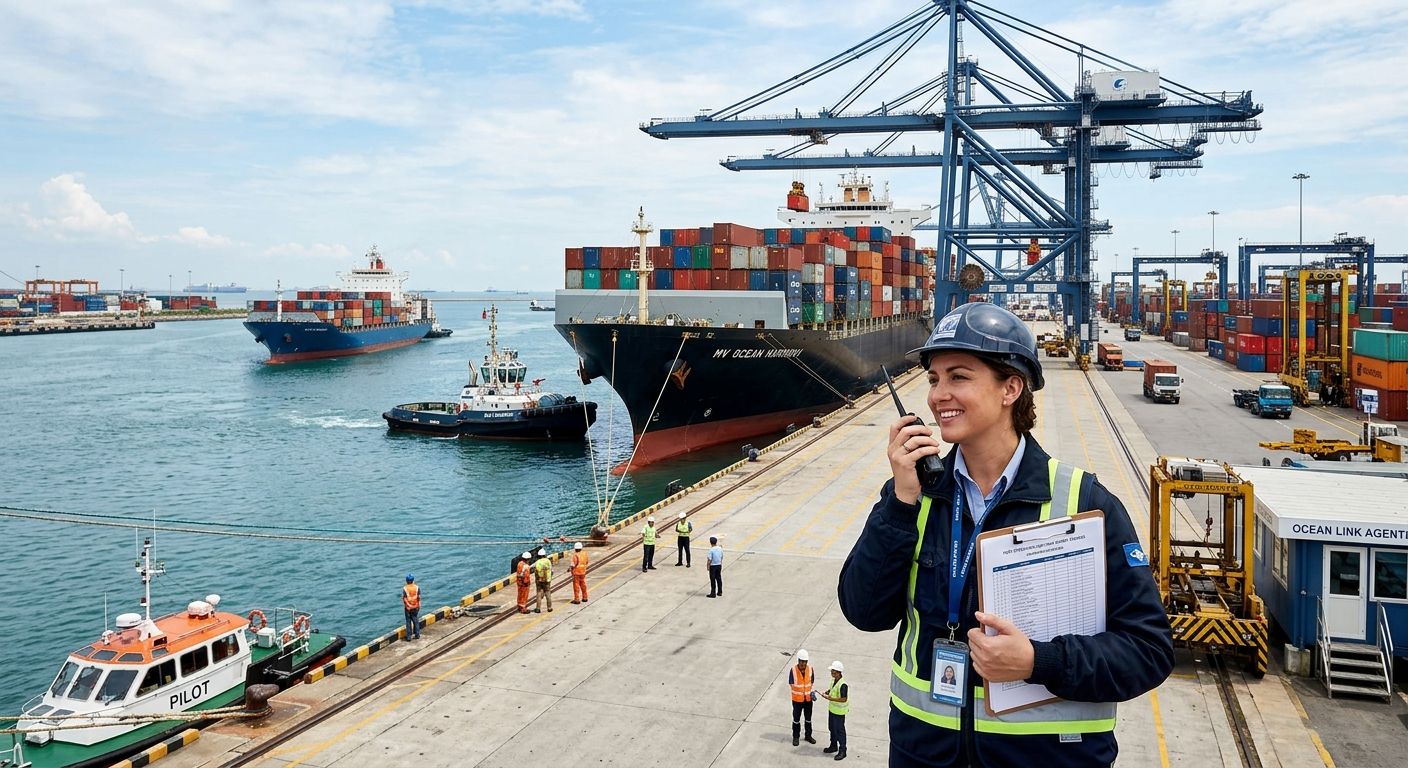
Behind every on-time port call, there’s usually a ship agency quietly making sure nothing gets stuck in bureaucracy, miscommunication, or last‑minute chaos. In simple terms: the ship agent is the owner’s and captain’s “local fixer” who turns a complex port visit into a smooth, predictable operation
What a ship agency actually does
A ship agency represents the vessel owner or operator in port and takes care of the operational, documentary, and logistical side of the port call from arrival to departure.
Their core job is to be the single point of contact between the ship and everyone else in port: authorities, terminal operators, suppliers, and service providers.
Typical responsibilities include:
- Coordinating arrival, berthing, and departure formalities with port control and terminal.
- Arranging pilotage, tug assistance, mooring, and other essential port services.
- Handling customs, immigration, health, and other regulatory clearances for vessel and crew.
- Managing cargo documentation and ensuring compliance with local and international rules.
- Organizing supplies (bunkers, fresh water, provisions), repairs, and crew support (transport, medical, accommodation).
- Keeping owners and masters updated on schedules, delays, and any operational issues.
All of this is done with one goal: minimize delays, control costs, and keep the vessel’s turnaround time as short and safe as possible.
Why ports run smoother with a good ship agent
Ports are busy ecosystems with many moving parts and strict regulations. A competent ship agent brings local knowledge, established relationships, and clear communication channels that prevent small problems from becoming big delays.
Key contributions to smooth operations:
- Faster clearance: Agents know exactly which documents, forms, and approvals are needed and how to submit them correctly the first time.
- Better coordination: They align terminal plans, cargo operations, and support services so everything happens in the right sequence.
- Risk control: By ensuring compliance with safety, security, and environmental rules, agents reduce the chance of fines, detentions, or operational stoppages.
- Clear communication: Owners, charterers, masters, and local parties all receive consistent, timely updates, which avoids confusion and rework.
In practice, this means fewer idle hours at anchor, more predictable berthing windows, and cargo operations that start and finish on schedule.
How it looks in a typical port call
Before arrival, the agent prepares the “scenario” for the port call: collecting vessel particulars, cargo details, crew lists, and required permits, then sharing them with the right parties.
During the stay, they monitor cargo operations, handle any changes in plan, and coordinate additional services if needed (repairs, inspections, crew changes).
At departure, they finalize documentation, settle port accounts, and send a complete report to the owner or operator.
This end‑to‑end management is what allows shipping companies to run tight schedules across multiple ports without having a large local team in every location.
Bottom line
A ship agency doesn’t move the cargo itself, but it makes sure everything around the cargo and the vessel moves correctly, legally, and on time. In modern port logistics, that role is not just supportive—it’s essential for smooth, efficient, and compliant port operations.



Leave a comment