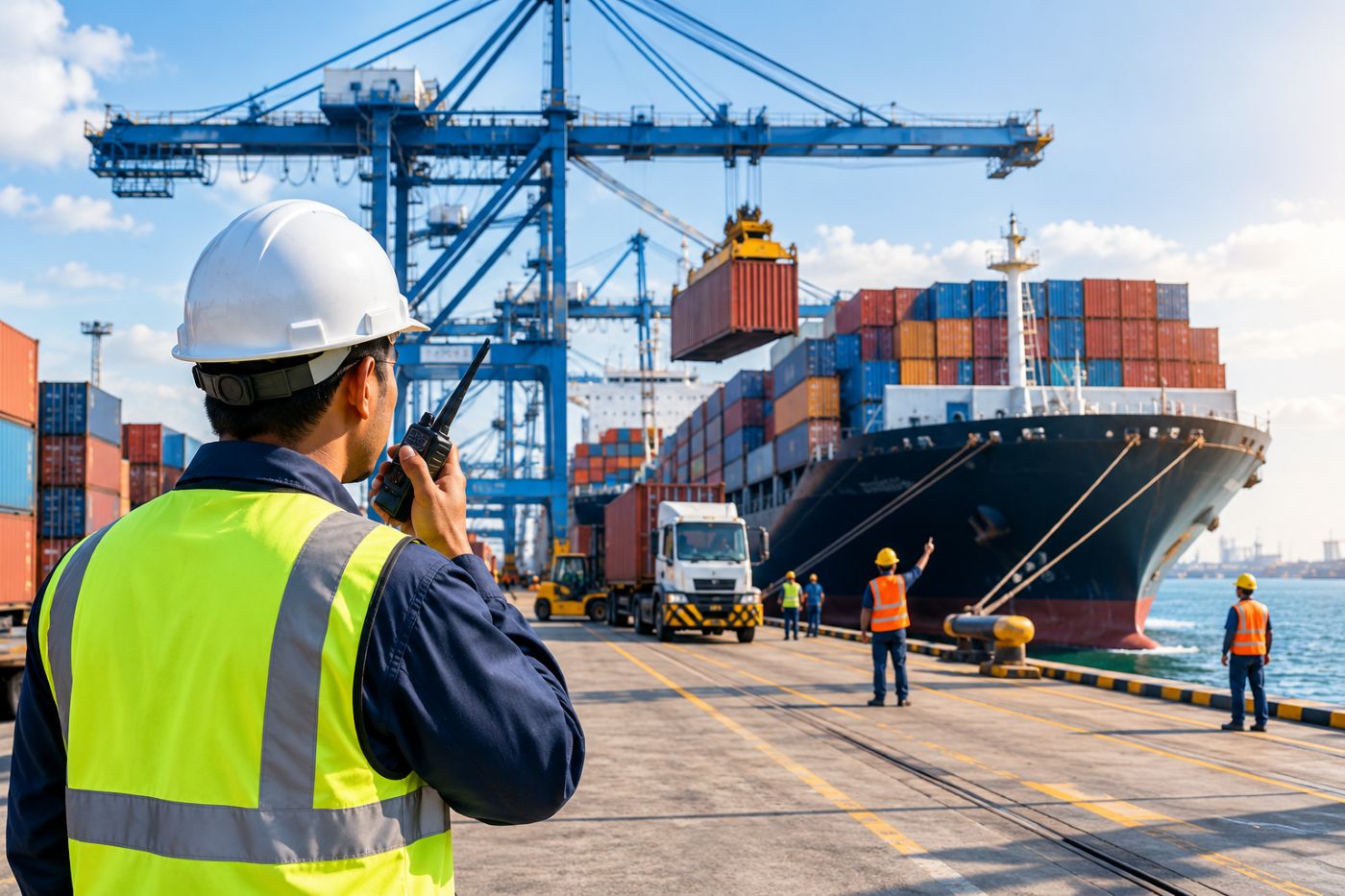
When a vessel arrives at a port, there is no time to waste. Cargo needs to be loaded or discharged, equipment needs to be ready, workers need to be in position, and everyone has to know what is happening.
Sounds simple, right? In reality, cargo operations involve many moving parts. This is where stevedoring coordination becomes important.
Good coordination between the ship, stevedoring team, terminal, port authorities, and ship agent can make the difference between a smooth operation and a day full of delays.
What Is Stevedoring Coordination?
Stevedoring coordination is basically about making sure everyone involved in cargo handling is working from the same plan.
Stevedores are responsible for handling cargo during loading and discharging operations. They work with cranes, forklifts, trucks, cargo gear, and other equipment to move goods safely between the vessel and the terminal.
But moving cargo is not just about having enough manpower and equipment. Timing and communication are just as important.
For example, if the stevedoring team is ready but the required equipment is not available, operations can stop. If the cargo plan changes but the team is not informed, the vessel may face unnecessary delays.
That is why coordination matters.
Why Good Coordination Matters
1. It Keeps the Vessel on Schedule
Ports operate on tight schedules. A delay during cargo operations can affect the vessel’s departure time and potentially its next port call.
With proper coordination, the stevedoring team can prepare manpower, equipment, and working areas before cargo operations begin. This helps reduce waiting time and keeps the operation moving.
2. It Improves Safety
Cargo operations can involve heavy equipment, large containers, bulk cargo, trucks, cranes, and many workers operating in the same area.
Clear communication helps everyone understand their responsibilities and follow the correct procedures.
A well-coordinated operation is generally a safer operation because people know what is happening and what to expect next.
3. It Makes Better Use of Equipment
Cranes, forklifts, trucks, and other cargo-handling equipment are valuable resources.
Poor planning can leave equipment waiting around or create bottlenecks where too many activities depend on the same machine.
Good stevedoring coordination helps make sure the right equipment is available at the right time, keeping cargo moving efficiently.
4. It Helps Control Costs
Every hour spent waiting at a port can have a cost.
Delays may come from equipment problems, manpower issues, poor communication, documentation, or changes in the cargo plan.
By coordinating these elements early, ship agents and stevedoring teams can help reduce unnecessary delays and keep port expenses under control.
Where Does the Ship Agent Fit In?
The ship agent often plays the role of the communication bridge between the vessel and the shore side.
Before the vessel arrives, the agent can coordinate with the terminal, stevedoring company, port authorities, and other relevant parties.
During cargo operations, the agent may monitor progress, communicate operational updates, follow up on issues, and make sure important information reaches the right people.
For example, if the vessel’s cargo plan changes, the agent can help communicate the update to the relevant parties. If there is a delay or operational issue, the agent can coordinate with the parties involved to find a practical solution.
In other words, the agent helps keep everyone in the loop.
Communication Is the Key
One of the biggest challenges in cargo operations is not always the physical movement of cargo. Sometimes, it is simply making sure the right information reaches the right person at the right time.
A quick update about crane availability, cargo readiness, weather conditions, equipment problems, or changes in the vessel’s schedule can make a big difference.
That is why good ship agency services are not only about documentation and port formalities. They are also about active communication and coordination.
What Happens When Coordination Is Poor?
Without proper coordination, small problems can quickly become bigger ones.
A crane may be waiting for cargo. Trucks may be stuck in a queue. Stevedores may be waiting for instructions. The vessel’s crew may not have the latest cargo information.
Each problem might seem minor on its own, but together they can create significant delays.
This is why experienced ship agents pay close attention to the details before and during cargo operations.
Keeping Cargo Operations on Track
At the end of the day, successful cargo operations are about teamwork.
The vessel crew, terminal operator, stevedores, port authorities, equipment providers, and ship agent all have different responsibilities. When these parties communicate effectively and work according to a clear plan, cargo can move safely and efficiently.
Stevedoring coordination may happen behind the scenes, but its impact is easy to see: fewer delays, better equipment utilization, safer operations, and a vessel that can stay closer to schedule.
For shipowners and operators, that can make a real difference.
Good coordination keeps cargo moving. And when cargo keeps moving, the entire port operation stays on track.


Leave a comment